The FDCPA and TDCA: The Debt Collection Laws Most HOA Firms Don’t Know — And Why That Matters

The Property Code is a shield: it can stop an HOA foreclosure, but it has no damages action that makes the HOA pay, and its fee provisions run the association’s way. This part is about the sword. A written dispute can halt collection under 15 U.S.C. § 1692g(b) until the HOA verifies every charge — and the FDCPA and TDCA provide damages, statutory minimums, and attorney’s fees running the homeowner’s direction, including the automatic DTPA tie-in under § 392.404(a).
No Hearing, No Fees: The Most Overlooked Protection In Texas HOA Law

Requesting a § 209.007 hearing isn’t about winning the hearing. It’s about triggering § 209.008(b) — the fee bar that erased every dollar of attorney’s fees in Dao v. Mission Bend. The protection works even when you lose on the merits.

The Hearing the Statute Says Doesn’t Apply: How Section 209.007(d) Takes Away Your Hearing In A Foreclosure Suit — And Why Judges Get It Wrong

Section 209.007(d) takes away your Sec. 209.007 hearing the moment the HOA sues for foreclosure — then says a party “may file a motion to compel mediation.” When a homeowner filed it, the judge denied it as “premature.” The statute contains no timing limit.

The HOA Knew It Couldn’t Beat You — So It Tried To Get A Default Judgment By Fraud

Read the first nine parts of this series together, and they describe a strategy, not a string of mistakes. An HOA that could not win on the merits engineered a proceeding where the homeowner never got a chance to defend.

The Unrecorded Fines: How § 202.006 Makes HOA Penalties Disappear Until They’re Filed — And What It Means When The HOA Gives Them Up

A schedule of fines that was never recorded with the county has “no effect” under § 202.006. The HOA’s own 2019 reversal — dropping every fine after being challenged — proves it knew. Then the same law firm tried again in 2025.

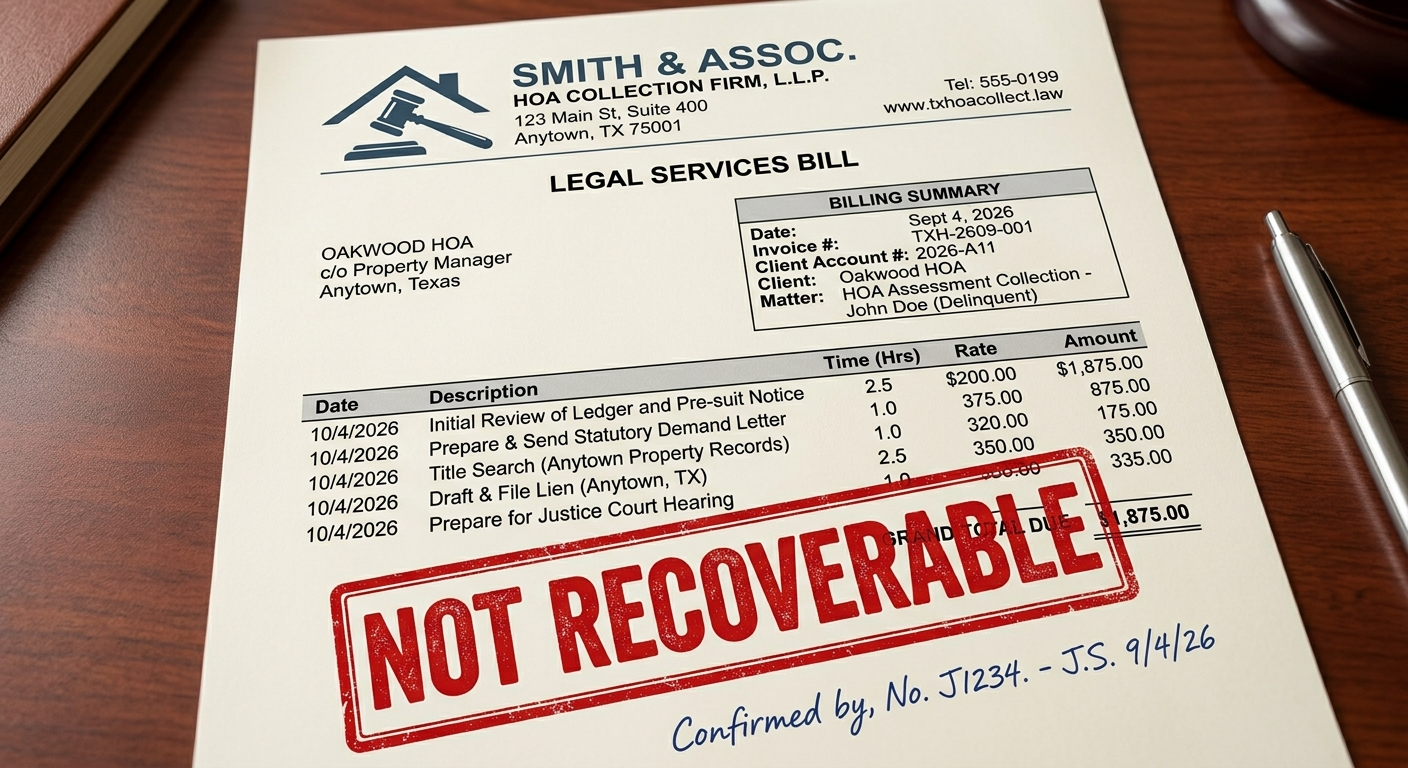
The 450 Fill-In-The-Blank: When An HOA Collection Agency Charges Top Dollar For Clerical Work — And Gets Paid Twice

If a collection agency works on contingency, the homeowner is not liable for its fees. An affidavit claiming $450/hour for “original research” when the work was clerical form-filing is a false statement that can be challenged directly.

The Phantom Vote: How An Amendment That Should Have Failed Can Inflate A Decade of Dues — And A Foreclosure

Around 2015, the HOA sent absentee ballots for a dues increase amendment. Allegedly, the ballots offered no “against” option, omitted a mandatory disclaimer, and the in-person vote was cancelled. If true, every dues increase since has been unauthorized.

Pandemic Relief Money And The Same-Day Threat: When An HOA Collected Federal COVID Aid, Then Foreclosed Anyway

The HOA accepted federal CARES Act money through a Texas state agency in 2022 to satisfy the debt. Then it sent a violation notice, and a collection notice — all dated the same day — and kept collecting.

The Zombie Fine: Resurrecting a 2022 Notice to Justify a 2025 Penalty

A 2022 notice cannot support a 2025 fine, especially after the same claim was already settled and dismissed. The six-month rule, a misread damages statute, and res judicata each independently make the zombie fine unenforceable.

The Vote Nobody Could See: When An HOA Authorizes Foreclosure At A Meeting The Owner Was Never Really Told About

Texas law prohibits an HOA board from even voting on foreclosure without prior notice to owners. But when the agenda says only “additional collection steps, including foreclosure,” does that really tell anyone whose home is on the line?