When The Buyer Takes The Law Into His Own Hands: Self-Help Eviction, Dumped Property, And Renovations On A Broken Title

Texas Property Code § 209.011(a) commands a purchaser of occupied property at an HOA foreclosure sale to “commence and prosecute a forcible entry and detainer action” to get possession. This buyer changed the locks himself, dumped a lifetime of property in commercial dumpsters, and started renovating — before the redemption period had even run. Each act created liabilities of its own.

When The Sale Is As Defective As The Judgment: Five Independent Defects In The Foreclosure Sale Itself

A home sold for 18% of its appraised value, at a sale noticed with a phantom plaintiff, confirmed by a return that named nobody, closed with a tax deed that recited the wrong redemption statute. Texas law requires only a slight irregularity that contributes to a grossly inadequate price to set a sale aside. This sale had four.

The DTPA Loophole: Why Your HOA May Be Beyond THE DTPA’s Reach — But Its Management Company Is Not

The DTPA offers treble damages and fee-shifting — but only to “consumers.” Whether a homeowner paying mandatory assessments is a consumer of the HOA is genuinely unsettled. The management company is a different story, and under Basic Energy the two things that connect a defendant to a consumer transaction are exactly what a management company does.

The FDCPA and TDCA: The Debt Collection Laws Most HOA Firms Don’t Know — And Why That Matters

The Property Code is a shield: it can stop an HOA foreclosure, but it has no damages action that makes the HOA pay, and its fee provisions run the association’s way. This part is about the sword. A written dispute can halt collection under 15 U.S.C. § 1692g(b) until the HOA verifies every charge — and the FDCPA and TDCA provide damages, statutory minimums, and attorney’s fees running the homeowner’s direction, including the automatic DTPA tie-in under § 392.404(a).

No Hearing, No Fees: The Most Overlooked Protection In Texas HOA Law

Requesting a § 209.007 hearing isn’t about winning the hearing. It’s about triggering § 209.008(b) — the fee bar that erased every dollar of attorney’s fees in Dao v. Mission Bend. The protection works even when you lose on the merits.

The Hearing the Statute Says Doesn’t Apply: How Section 209.007(d) Takes Away Your Hearing In A Foreclosure Suit — And Why Judges Get It Wrong

Section 209.007(d) takes away your Sec. 209.007 hearing the moment the HOA sues for foreclosure — then says a party “may file a motion to compel mediation.” When a homeowner filed it, the judge denied it as “premature.” The statute contains no timing limit.

The HOA Knew It Couldn’t Beat You — So It Tried To Get A Default Judgment By Fraud

Read the first nine parts of this series together, and they describe a strategy, not a string of mistakes. An HOA that could not win on the merits engineered a proceeding where the homeowner never got a chance to defend.

The Unrecorded Fines: How § 202.006 Makes HOA Penalties Disappear Until They’re Filed — And What It Means When The HOA Gives Them Up

A schedule of fines that was never recorded with the county has “no effect” under § 202.006. The HOA’s own 2019 reversal — dropping every fine after being challenged — proves it knew. Then the same law firm tried again in 2025.

The 450 Fill-In-The-Blank: When An HOA Collection Agency Charges Top Dollar For Clerical Work — And Gets Paid Twice

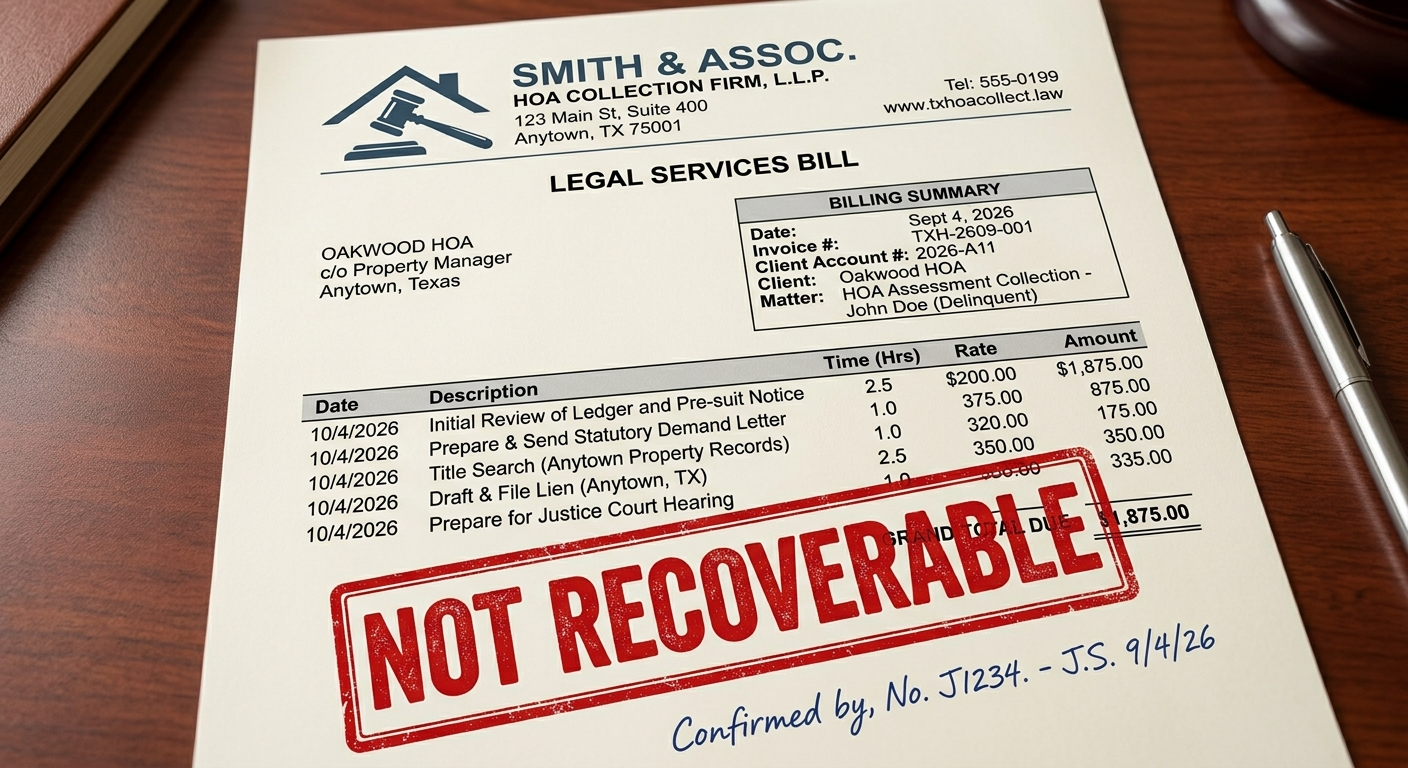
If a collection agency works on contingency, the homeowner is not liable for its fees. An affidavit claiming $450/hour for “original research” when the work was clerical form-filing is a false statement that can be challenged directly.

The Phantom Vote: How An Amendment That Should Have Failed Can Inflate A Decade of Dues — And A Foreclosure

Around 2015, the HOA sent absentee ballots for a dues increase amendment. Allegedly, the ballots offered no “against” option, omitted a mandatory disclaimer, and the in-person vote was cancelled. If true, every dues increase since has been unauthorized.